
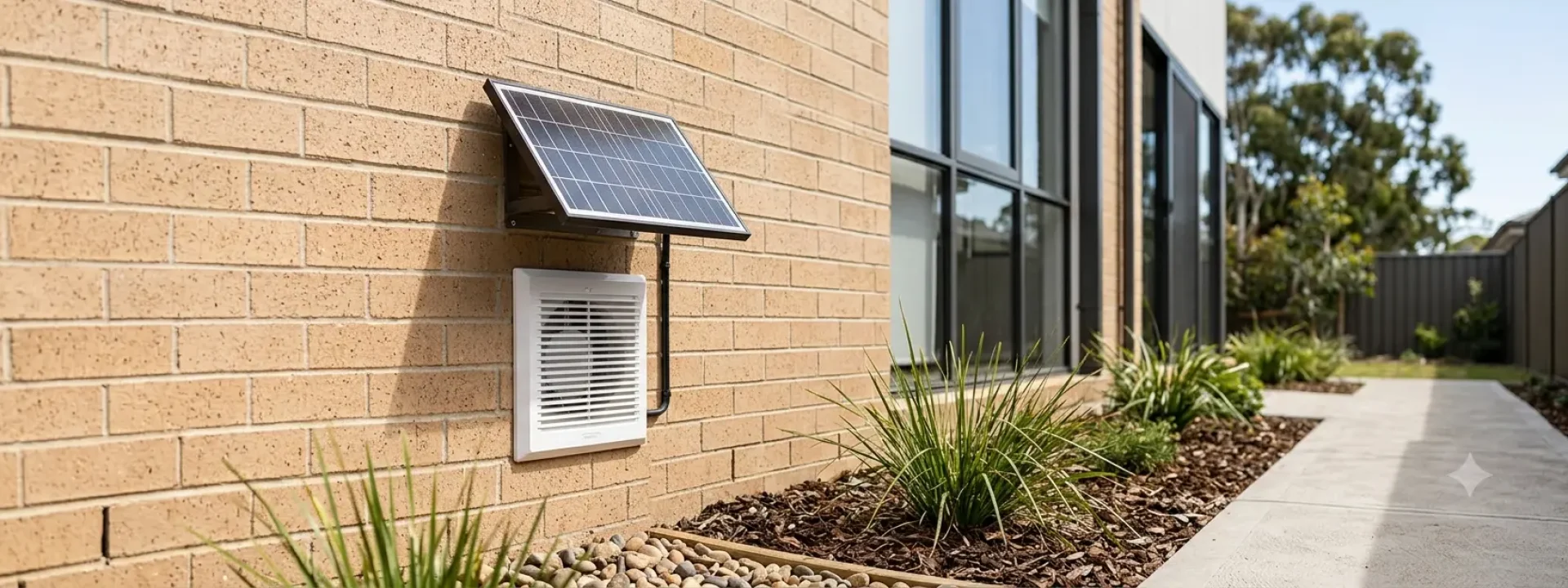
Future subfloor ventilation Sydney homes will likely rely on is already partly visible in products and approaches available today – this isn’t a purely speculative look decades ahead, but a survey of technologies genuinely emerging or maturing right now. Future subfloor ventilation Sydney systems point toward is more responsive, more monitored, and more integrated with the rest of a smart home than the passive vent-and-fan setups that have defined subfloor ventilation for most of the past century. This guide separates what’s already commercially available from what remains further off, so expectations stay grounded rather than drifting into speculation.
This is a forward-looking companion to our guide on the science behind effective subfloor air circulation, which explains the underlying physics these emerging technologies still have to work within – better sensors and smarter controls don’t change the fundamental airflow principles, they change how precisely a system can respond to them.
Humidity-Responsive Smart Controls: Already Here
Some of the most practically useful advances in subfloor ventilation aren’t exotic – they’re refinements of mechanical ventilation systems already commercially available and increasingly common in current installations. Future subfloor ventilation Sydney homeowners install is likely to make these refinements the norm rather than a premium option.
Continuous Humidity Sensing
Rather than running at a fixed speed regardless of actual conditions, current-generation systems increasingly incorporate humidity sensors that continuously monitor subfloor conditions and adjust fan operation accordingly. Future subfloor ventilation Sydney installations will likely make this kind of responsive control the default rather than an upgrade option, simply because it improves both moisture control and energy efficiency without meaningful downside.
Reduced Energy Use Through Demand-Based Operation
Because humidity-responsive systems only run at higher speed when actually needed, they reduce unnecessary electricity consumption compared with a fan running continuously at a fixed speed regardless of conditions. This efficiency gain, alongside the noise reduction benefits discussed in our guide to subfloor ventilation noise, is a significant reason demand-responsive control is becoming a standard feature rather than a premium add-on.
App-Based Remote Monitoring
Many current smart ventilation products allow homeowners to check subfloor humidity readings and system status remotely through a smartphone app, rather than requiring a physical visit to the subfloor access point to check a gauge. Future subfloor ventilation Sydney systems are likely to extend this further, with more detailed historical trend data and automated alerts when readings move outside an expected range.
Quieter, More Efficient Motor Technology
Motor technology used in subfloor fans has genuinely evolved, and this trend is likely to continue.
Brushless DC Motors Replacing Older AC Induction Designs
Brushless DC (BLDC) motors, already widely used in modern HVAC and ceiling fan applications, offer meaningful efficiency and noise advantages over older AC induction motor designs, since they can run at precisely controlled speeds without some of the mechanical characteristics that contribute to noise and energy loss in older motor types. As this motor technology becomes more common and cost-competitive in subfloor-specific fan products, future subfloor ventilation Sydney installations are likely to default to quieter, more efficient motors as standard, addressing some of the noise causes covered in our dedicated noise guide at the source rather than through retrofit fixes. This shift also has implications for subfloor ventilation system longevity, since these motor types often have fewer wear-prone components than older equivalents.
Variable Speed as Standard, Not an Upgrade
Alongside more efficient motors, variable speed control – allowing a fan to run at exactly the speed current conditions call for, rather than a simple on/off cycle – is increasingly standard rather than a premium feature. This directly supports the demand-responsive, humidity-based control discussed above, since variable speed capability is what actually allows a system to respond proportionally to sensor readings rather than simply switching fully on or off.
Predictive and Data-Driven Maintenance
Beyond real-time monitoring, a genuine emerging trend is using accumulated data to anticipate problems before they cause visible damage.
Trend Analysis for Early Problem Detection
Systems that log humidity and fan performance data over time can potentially flag gradual changes – a slow upward drift in baseline humidity, or a fan running progressively harder to maintain the same conditions – that might indicate a developing problem well before it becomes obvious through a musty smell or visible damage. This kind of trend-based early warning is a genuinely useful direction for future subfloor ventilation Sydney systems to develop further, building on the monitoring capability already available in current smart systems.
Maintenance Scheduling Based on Actual Usage
Rather than a fixed calendar-based maintenance schedule applied uniformly regardless of how hard a system has actually been working, data on cumulative fan run-time and operating conditions could support maintenance scheduling tailored to a system’s actual usage pattern – a system that has run harder due to a particularly wet period serviced sooner than one that’s had a quieter year. This is a logical extension of currently available monitoring data rather than a distant speculative technology.
Non-Invasive Moisture Detection
Assessing subfloor conditions has traditionally required physical access – crawling into the space with a moisture meter or torch, as discussed in our guide to documenting subfloor moisture damage. Some emerging approaches aim to reduce how much of this physical access is needed.
Thermal Imaging for Moisture Assessment
Thermal imaging cameras, already used by some building inspectors, can help identify moisture patterns in structures by detecting the temperature differences that damp materials typically exhibit compared with dry surrounding material. This technology is already in professional use rather than purely speculative, though it supplements rather than fully replaces physical inspection and moisture meter readings for a definitive diagnosis.
Permanently Installed Sensor Networks
Rather than relying solely on periodic manual checks, some properties are beginning to install permanent, low-profile humidity and temperature sensors at multiple points throughout a subfloor space, providing more granular, continuous data than a single central sensor or occasional manual reading can offer. This approach is particularly relevant for larger or more complex subfloor layouts – including the kind of multi-zone spaces discussed in our guide to ventilation for multi-storey homes – where humidity can genuinely vary considerably between different sections of the same subfloor.
Solar-Assisted and Energy-Efficient Systems
Alongside dedicated solar-powered subfloor fan options already available on the market, broader energy efficiency trends are shaping future subfloor ventilation Sydney system design more generally.
Reduced Grid Dependence
Solar-powered fan units, already a genuine current option for properties seeking to reduce ongoing electricity costs associated with mechanical ventilation, are likely to become more capable and more commonly specified as panel efficiency and battery storage options continue to improve, reducing the gap between solar-powered and mains-powered system performance.
Integration With Whole-of-Home Energy Systems
As more Sydney homes install solar panels and battery storage for broader household energy needs, subfloor ventilation systems – whether solar-dedicated or drawing from the home’s general electricity supply – are increasingly likely to be considered as part of a home’s overall energy management approach, rather than an isolated electrical load planned in complete separation from a home’s solar and battery setup.
Smart Home Ecosystem Integration
A broader trend across residential technology generally is the integration of previously standalone systems into unified smart home platforms, and subfloor ventilation is a plausible candidate for this kind of integration.
Centralised Monitoring Alongside Other Home Systems
Rather than a subfloor humidity app existing entirely separately from a home’s broader smart home system – security, climate control, and energy monitoring – future subfloor ventilation Sydney installations may increasingly integrate subfloor data into the same dashboard homeowners already use for other connected ventilation systems and home systems, similar to the kind of integration touched on in our guide to the connection between subfloor ventilation and home security.
Automated Response to Weather Forecasts
An emerging possibility, building on already-available weather API data, is a ventilation system that adjusts its operation proactively based on an incoming weather forecast – increasing airflow ahead of a forecast heavy rain event, for instance, rather than only responding reactively once subfloor humidity has already begun to rise. This kind of forecast-integrated automation is more forward-looking than the humidity-responsive systems already commercially available, but builds on existing, proven sensor and control technology rather than requiring an entirely new technological foundation.
What Remains Genuinely Speculative
It’s worth being honest about the difference between near-term, already-available technology and genuinely speculative possibilities further down the track.
Fully Autonomous Diagnostic Systems
The idea of a subfloor ventilation system that can independently diagnose the specific cause of an emerging problem – distinguishing rising damp from general humidity, or flagging likely termite conducive conditions, without any human inspection – remains considerably more speculative than the sensor and control technology already discussed. Current systems can flag that something has changed; genuinely diagnosing why still relies on professional judgement and physical inspection for the foreseeable future.
Robotic Subfloor Inspection
Small robotic devices capable of navigating a subfloor space to carry out visual inspection or take readings in hard-to-access areas have been explored in various building inspection contexts, but widespread, reliable commercial availability specifically for residential subfloor ventilation assessment isn’t yet an established, mainstream reality for Sydney properties, however promising the underlying concept.
Balancing Innovation With Proven Fundamentals
None of these emerging technologies change the underlying physics covered in our guide to subfloor air circulation science – cross-ventilation, adequate opening area, and correctly matched fan capacity remain the foundation any system, however smart, still depends on. Future subfloor ventilation Sydney homes adopt will make it easier to monitor and fine-tune a well-designed system, and will likely make noisy, inefficient, poorly controlled systems less common as better components become standard. But a smart sensor and an app-based dashboard don’t compensate for a fundamentally undersized or badly placed system any more than a smart thermostat compensates for a poorly insulated house – the underlying subfloor ventilation design still needs to be right first.
Materials and Vent Design Innovation
Beyond electronics and motors, the physical materials used in vents and ducting themselves continue to evolve.
Corrosion-Resistant and Low-Maintenance Materials
Newer vent cover materials and coatings offer improved resistance to corrosion and weathering compared with older products, reducing the gradual degradation that eventually compromises airflow or requires premature replacement. This is a relatively unglamorous but practically significant area of improvement, since a vent cover that lasts longer without corroding or cracking keeps a system performing at its designed capacity for longer without homeowner intervention.
Self-Cleaning and Reduced-Blockage Vent Screens
Some newer vent screen designs aim to reduce the rate at which debris, leaf litter, and insect nesting material accumulate and block airflow, extending the interval between manual cleaning without compromising the pest and vermin-proofing function a vent screen also needs to provide. Future subfloor ventilation Sydney products are likely to continue refining this balance between airflow, durability, and reduced maintenance burden.
Heritage-Compatible Modern Materials
For heritage-listed properties, discussed in more detail in our guide to heritage home ventilation, materials innovation increasingly includes products designed to visually match traditional cast iron or period-appropriate styling while using modern, more corrosion-resistant materials underneath – offering heritage-sensitive appearance without sacrificing the durability improvements available in contemporary vent products.
Building Code Evolution and Climate-Responsive Standards
Building standards themselves are a slower-moving but genuinely relevant part of how future subfloor ventilation Sydney requirements may develop.
Standards Reviewed Periodically Against Current Data
The National Construction Code is reviewed and updated periodically, and given the documented climate trends discussed in our guide to climate change and subfloor moisture in Sydney – particularly the measured increase in short-duration rainfall intensity – it’s plausible that future Code revisions could adjust minimum ventilation and drainage provisions to reflect current rather than purely historical rainfall data. This isn’t a confirmed change, but a reasonable direction given how Code requirements have historically been informed by updated climatic and engineering data over time.
Implications for Design Margins Today
Whether or not a specific future Code change occurs, the broader point already covered in our climate change guide stands on its own: designing new systems with a reasonable margin above bare historical minimums is a sensible approach regardless of whether regulation formally catches up to that recommendation. Future subfloor ventilation Sydney standards may eventually reflect this directly, but a well-advised installation today doesn’t need to wait for that to happen.
Suburb and Property-Type Adoption Patterns
Uptake of these emerging technologies isn’t uniform across Sydney, and understanding why helps set realistic expectations for any specific property.
New Growth Corridor Developments
Newer developments across growth corridor suburbs like Kellyville and the broader North West are more likely to have smart-capable electrical infrastructure and modern subfloor construction that suits straightforward retrofitting of sensor and monitoring technology, making them a natural fit for early adoption of future subfloor ventilation Sydney innovations as they become available.
Established Suburbs With Older Systems
Established suburbs across the Inner West, North Shore, and Eastern Suburbs often have older mechanical systems, if any, installed under previous technology generations. These properties represent the largest opportunity for upgrade, since the gap between an ageing single-speed fan system and a current humidity-responsive, efficient alternative is considerably larger than the gap between a recently installed modern system and the next generation of incremental improvements. A fresh subfloor ventilation assessment is a sensible starting point for any of these older systems before deciding which newer features are worth adding.
Heritage Properties Balancing Innovation and Preservation
As discussed in our heritage ventilation guide, heritage-listed properties face additional constraints on visible vent styling, but this doesn’t prevent adoption of internal technology improvements – smart fan units, humidity sensors, and app-based monitoring can generally be incorporated without any change to a heritage-sensitive external appearance, since the innovation happens inside the equipment rather than in its visible housing.
What This Means for Homeowners Considering an Upgrade
For homeowners currently planning a subfloor ventilation upgrade, several of the technologies discussed here are worth asking about directly, since they’re already available rather than years away.
Questions Worth Raising With an Installer
Ask whether humidity-responsive variable speed control is available for your specific system, whether app-based remote monitoring is included or available as an add-on, and whether the fan technology being proposed uses more modern, efficient motor designs rather than older, noisier equivalents. These are reasonable, specific questions given how commercially available this ventilation systems technology already is.
Weighing Smart Features Against Core System Adequacy
While smart monitoring and app connectivity are genuinely useful additions, they shouldn’t come at the expense of getting the fundamental sizing and placement right first. A well-designed passive system without any smart features will outperform a poorly designed mechanical system with an impressive app, so prioritising core design adequacy – covered in our guides to installation and air circulation science – before evaluating smart feature options keeps the decision-making in the right order. This is a recurring theme across future subfloor ventilation Sydney adoption generally: technology enhances a sound design, it doesn’t substitute for one.
Retrofitting Smart Features to Existing Systems
For homeowners with an existing, adequately performing mechanical system, it’s often possible to retrofit humidity sensors and monitoring capability without replacing the entire system, offering a lower-cost path to some of these benefits without a full system overhaul. Where an existing system has an underlying rising damp issue misdiagnosed as general humidity, addressing that with proper rising damp treatment first ensures any new smart monitoring is measuring an accurately diagnosed situation rather than papering over an unresolved separate problem. Similarly, resolving any existing mould growth through professional mould solutions before adding new monitoring gives a clean baseline for tracking genuine improvement going forward.
Purposeful Information
Q: Is smart subfloor ventilation monitoring already available in Sydney, or is it still experimental?
A: Humidity-responsive controls and app-based remote monitoring are already commercially available and increasingly common in current installations – this isn’t speculative future technology, though the sophistication and integration of these features continues to improve.
Q: Will a smart ventilation system fix a poorly designed subfloor setup?
A: No. Smart features improve monitoring and responsiveness, but they don’t compensate for fundamentally inadequate vent placement, undersized fan capacity, or poor duct design. Getting the core system design right remains the foundation any smart features build on.
Q: Are solar-powered subfloor fans a genuine current option or a future concept?
A: They’re a genuine current option already available for properties wanting to reduce grid electricity dependence, though ongoing improvements in solar and battery technology are likely to continue narrowing any performance gap with mains-powered systems.
Q: Can I add smart monitoring to my existing subfloor ventilation system?
A: In many cases, yes. Retrofitting humidity sensors and monitoring capability to an existing, adequately performing system is often possible without a full system replacement, offering a lower-cost path to improved monitoring.
Q: What subfloor ventilation technology is still mostly speculative rather than available now?
A: Fully autonomous diagnostic systems that independently distinguish between different moisture causes, and widespread robotic subfloor inspection devices, remain more speculative than the sensor, control, and motor technology already commercially available today.
This guide reflects subfloor ventilation technology and trends available as of publication and is intended for general educational purposes. Specific product availability changes over time; consult a qualified subfloor ventilation specialist for current options suited to your property.