
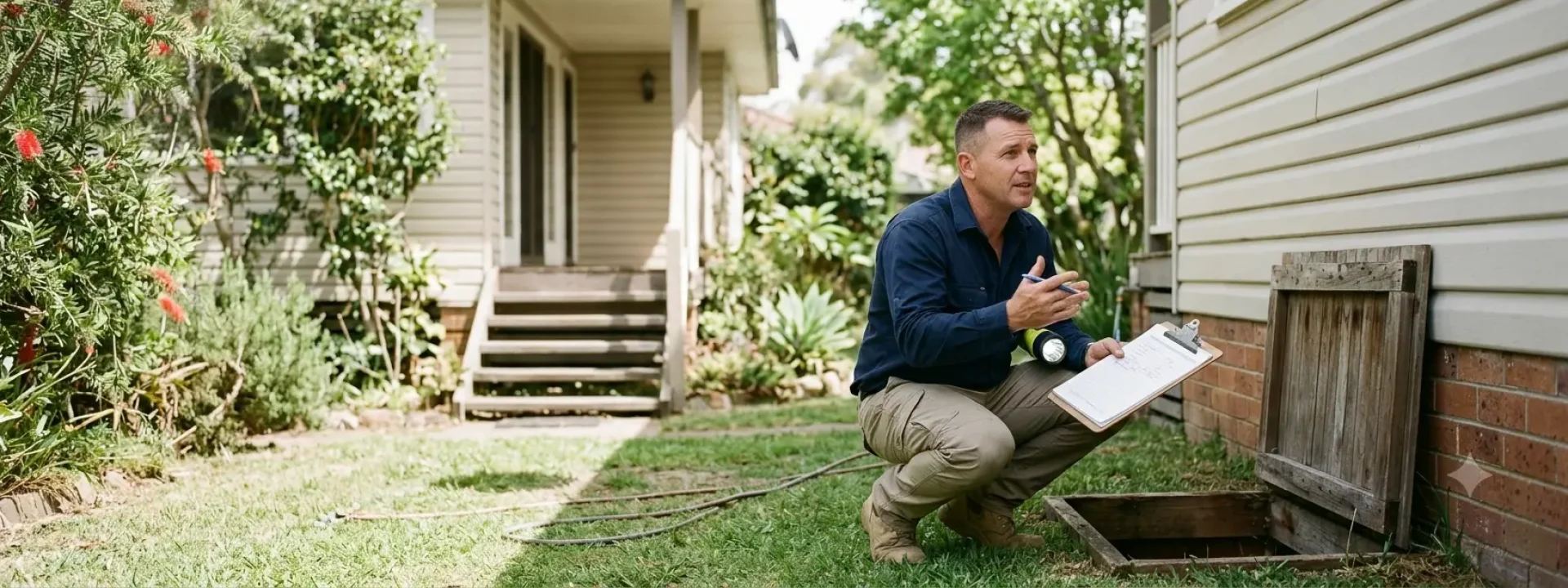
Pre-purchase subfloor inspection Sydney buyers commission before settling on a property can save considerably more than it costs, since subfloor ventilation problems are among the more expensive defects to discover after the sale is finalised. Pre-purchase subfloor inspection Sydney reports typically form part of a broader building and pest inspection, but subfloor ventilation specifically deserves closer attention than a standard report always gives it, since inadequate airflow, evidence of rising damp, or termite conducive conditions can be easy to underweight amid a longer list of other findings. This guide explains what a pre-purchase subfloor inspection Sydney buyers should expect, what red flags are worth taking seriously, and how to use the findings in negotiation.
This is a practical buyer-focused companion to our guides on documenting moisture damage and real estate moisture disclosure, both of which cover the same underlying issues from a different vantage point.
Why Subfloor Conditions Deserve Specific Attention Before Buying
A property’s subfloor is largely hidden from ordinary inspection during an open home or private viewing, which makes it one of the areas most likely to hide a costly problem that isn’t obvious on the surface.
Subfloor Problems Are Often Invisible During a Casual Viewing
Unlike a cracked wall or a stained ceiling, subfloor moisture and ventilation problems sit beneath the home, out of sight during a typical walk-through. A pre-purchase subfloor inspection Sydney buyers arrange is often the only point in the purchase process where this space gets a proper, qualified look before money changes hands.
The Cost of Discovering Problems After Settlement
Once a property has settled, remedying an inadequate ventilation system, treating rising damp, or addressing termite damage becomes the new owner’s financial responsibility, generally without any recourse against the seller unless a known, undisclosed issue can be proven – which is difficult and often not worth pursuing for a moderate repair cost. A pre-purchase subfloor inspection Sydney buyers commission before exchanging contracts is a considerably more reliable way to avoid this outcome than hoping a problem doesn’t exist, and it shifts the negotiating leverage to a point in the process where the buyer still has genuine options.
What a Standard Building Inspection Covers
Most buyers commission a standard pre-purchase building inspection, and it’s useful to understand exactly what this does and doesn’t include regarding subfloor conditions specifically.
AS 4349.1 and What It Requires
Pre-purchase building inspections in Australia are generally carried out in accordance with AS 4349.1, the Australian Standard covering the inspection of residential buildings for prospective purchasers. This standard specifically includes the subfloor space as a distinct area to be inspected and reported on, alongside the interior, exterior, roof space, and site generally. A pre-purchase subfloor inspection Sydney inspector carries out under this standard should specifically comment on subfloor access, visible moisture conditions, and general ventilation observations as part of a compliant report.
What a Standard Report Typically Notes About the Subfloor
A standard pre-purchase inspection report typically records whether the subfloor was accessible for inspection, visible moisture staining or damp conditions, obvious vent condition and placement, evident structural timber issues, and any signs of previous water damage or treatment. It’s a general visual assessment rather than a detailed ventilation capacity calculation, which is an important distinction for buyers to understand.
The Limits of a Standard Building Inspection
A standard building inspector is trained to identify defects and conducive conditions broadly, but is generally not a subfloor ventilation specialist carrying out the kind of capacity calculation and airflow assessment covered in our guide to subfloor air circulation science. Where a standard report flags a general concern – persistent dampness, undersized-looking vents, or a musty odour – this is often the point at which engaging a dedicated ventilation specialist for a more detailed follow-up assessment becomes worthwhile, rather than relying on the building inspection alone to fully characterise the problem.
What a Pest Inspection Adds
Alongside a building inspection, a separate or combined pest inspection covers ground relevant to subfloor conditions from a different angle.
AS 4349.3 and Timber Pest Inspections
Timber pest inspections are generally carried out under AS 4349.3, the standard specifically covering timber pest assessment, and cover conducive conditions for termite activity – including subfloor dampness, ground clearance, and timber-to-ground contact – alongside checking for active termite activity itself, as discussed in more detail in our guide to the connection between ventilation and termite prevention.
Why Combined Reports Matter for Subfloor Assessment
Because moisture and termite risk are connected, as covered in that guide, a combined building and pest inspection gives a more complete picture of subfloor conditions than either report alone. A pre-purchase subfloor inspection Sydney buyers rely on that only covers structural condition, without a corresponding pest assessment, may miss conducive conditions that a termite-focused inspector would specifically flag.
Red Flags Worth Taking Seriously
Several specific findings in a pre-purchase report warrant particular attention rather than being treated as routine, minor notes.
Persistent Musty Odours Noted by the Inspector
An inspector noting a persistent musty smell during the inspection – rather than a smell attributable to a specific, obvious, one-off cause – often indicates ongoing subfloor humidity consistent with inadequate ventilation, and is worth following up with more detailed questions rather than dismissing as a minor observation.
Visible Mould or Water Staining
Any visible mould growth or water staining noted in the subfloor space is a finding that deserves a direct follow-up question to the inspector about extent and likely cause, since this can range from a minor, easily resolved issue to a sign of a more significant, ongoing moisture problem requiring professional mould solutions.
Evidence of Previous Rising Damp Treatment
Where a report or the seller’s disclosure, as discussed in our guide to real estate moisture disclosure, notes previous rising damp treatment, it’s reasonable to request documentation of the specific rising damp treatment carried out, when it was done, and whether any warranty remains current, rather than simply accepting that the problem was “fixed” without verification.
Undersized or Damaged Vents
An inspector noting vents that appear undersized, damaged, blocked, or painted over – issues covered in more detail in our guide to heritage home ventilation for older properties specifically – points toward a likely ventilation upgrade being needed, which is a cost worth factoring into your overall assessment of the property.
Restricted or No Subfloor Access
Where a subfloor space couldn’t be accessed or fully inspected due to restricted clearance, blocked access, or other limitations, this should be treated as an incomplete assessment rather than an implicit “no issues found.” A pre-purchase subfloor inspection Sydney report noting restricted access is a signal to arrange a follow-up inspection once access can be improved, rather than proceeding on an assumption that no access means no problems.
Signs of Termite Activity or Significant Conducive Conditions
Active termite activity, mud tubes, or heavily conducive conditions like severe dampness combined with timber-to-ground contact are findings that warrant a specialist follow-up before proceeding, given the potential structural and financial implications discussed in our termite prevention guide. Where these conditions coexist with visible mould, factoring in the likely cost of professional mould solutions alongside pest treatment gives a more complete picture of the total remediation cost involved.
Informal Checks Buyers Can Make During an Open Home
Before commissioning any formal inspection, a few informal observations during an open home or private viewing can help buyers decide whether a property warrants closer scrutiny.
Noticing Musty Smells
A persistent musty smell noticeable on entry, particularly in ground-floor rooms, is worth noting even informally, since it often points toward subfloor humidity issues that a formal pre-purchase subfloor inspection Sydney report would later investigate in detail.
Checking Visible External Vents
Walking around the exterior of a property and noting whether vents appear intact, unobstructed, and reasonably distributed around the building’s perimeter gives an early, informal impression before a professional inspection confirms whether that impression holds up to closer scrutiny.
Asking the Agent Directly
Directly asking the selling agent whether the property has any known history of subfloor moisture issues, previous treatments, or ventilation upgrades is a reasonable question to ask at an open home, and the agent’s response – or lack of a clear answer – can inform how much weight to place on a subsequent formal inspection.
Looking for Recent Cosmetic Work Near Ground Level
Fresh paint, new skirting boards, or recent flooring work concentrated near ground level, without an obvious unrelated renovation reason, can sometimes indicate an attempt to conceal previous moisture damage, as discussed in our guide to real estate moisture disclosure. This isn’t proof of anything on its own, but it’s a reasonable prompt to ask more specific questions and ensure the formal inspection pays particular attention to that area.
Strata Properties and Shared Subfloor or Basement Areas
For apartments and strata-titled properties, the pre-purchase subfloor inspection Sydney buyers need looks somewhat different to a standalone house.
Subfloor Access May Be Limited or Shared
Many apartment buildings don’t have an individually accessible subfloor in the way a house does, with basement or under-building areas instead forming part of the building’s common property, managed by the owners corporation rather than an individual lot owner. Buyers should ask specifically how any shared subfloor, basement, or car park drainage and ventilation issues are managed, and whether the strata records show any history of relevant remediation work or disputes.
Reviewing Strata Records for Moisture History
A strata report, commissioned separately from a standard building inspection, can reveal past moisture-related building defects, special levies raised for remediation work, or ongoing disputes about common property maintenance – information a standard pre-purchase building inspection focused on an individual unit wouldn’t necessarily capture.
New Builds Versus Established Homes
The specific focus of a pre-purchase subfloor inspection Sydney buyers should prioritise differs somewhat between a newly built home and an established property.
New Construction Compliance Checks
For a newly built home, the relevant question is generally whether subfloor ventilation was installed to current National Construction Code requirements and properly signed off during the certification process, rather than whether age-related wear or historical treatment is a factor. Requesting copies of the compliance certificates and any building certifier sign-off relevant to subfloor construction is a reasonable request for a new or near-new property.
Established Homes and Cumulative History
For established homes, particularly those that have changed hands multiple times, a pre-purchase subfloor inspection Sydney report needs to account for a longer, sometimes less well-documented history of renovations, repairs, and potential past issues, making the seller’s disclosure statement and any available maintenance documentation particularly valuable alongside the physical inspection itself.
Requesting a Specialist Subfloor Assessment
For buyers who want more than a standard building inspection’s general observations, arranging a dedicated subfloor ventilation assessment alongside the standard inspection gives a more technical, detailed picture.
What a Specialist Assessment Adds
A dedicated subfloor ventilation assessment can calculate whether existing ventilation systems meet current requirements for the property’s size and construction, take detailed humidity readings rather than a general visual impression, and provide a more specific estimate of what upgrade work, if any, would be needed and its likely scope.
When This Extra Step Is Worth It
This additional assessment is particularly worth arranging for older properties, heritage-listed homes with original ventilation systems, properties on suburbs known for reactive clay conditions like Parramatta, Liverpool, or Penrith, and any property where the standard building inspection flagged a general concern without fully characterising it.
Timing Within the Purchase Process
For properties purchased via private treaty with a cooling-off period, arranging a specialist assessment during that period – alongside the standard building and pest inspection already likely required – gives buyers a chance to withdraw or renegotiate based on the findings. For properties purchased at auction, where cooling-off periods typically don’t apply in NSW, arranging any additional inspections before the auction itself, rather than after a successful bid, is the only way to have this information before becoming contractually committed.
Budgeting Time for a Thorough Pre-Purchase Subfloor Inspection Sydney Process
Because a specialist assessment takes additional time to arrange and complete beyond the standard building and pest inspection, buyers seriously considering a property with any subfloor concerns should factor this into their overall purchase timeline from the outset, rather than trying to squeeze an additional inspection into the final days of a cooling-off period.
Using Findings in Negotiation
Once a pre-purchase subfloor inspection Sydney report identifies a genuine issue, several approaches are available for addressing it before finalising the purchase.
Requesting a Price Adjustment
Where a specific, quantifiable cost is associated with a needed upgrade – a documented ventilation systems installation quote, for instance – requesting a price adjustment reflecting that cost is a reasonable negotiating position, particularly where the issue wasn’t previously disclosed by the seller.
Requesting Pre-Settlement Rectification
Alternatively, buyers can request that the seller arrange and complete the necessary work – a ventilation upgrade, rising damp treatment, or pest treatment – before settlement, with the contract made conditional on satisfactory completion and documentation of the work.
Deciding Whether to Proceed at All
For more significant findings – extensive structural damage, a major undisclosed termite problem, or a property requiring substantial remediation beyond what the buyer is prepared to take on – the inspection findings may reasonably inform a decision to withdraw from the purchase entirely, particularly during a cooling-off period specifically intended to allow this kind of reconsideration. A pre-purchase subfloor inspection Sydney buyers take seriously at this stage, rather than treating it as a formality to get through quickly, is what actually protects a buyer’s position when a genuinely significant issue turns up.
Suburb-Specific Considerations for Buyers
What to look for in a pre-purchase subfloor inspection Sydney buyers should focus on shifts somewhat depending on the specific suburb and housing type.
Heritage Suburbs: Paddington, Balmain, Glebe, and Leichhardt
For heritage-listed or older properties in these suburbs, buyers should specifically ask whether the inspector assessed original ventilation adequacy against current standards, and whether any heritage approval considerations, as discussed in our heritage ventilation guide, would affect the cost or process of any recommended upgrade.
Reactive Clay Suburbs: Parramatta, Liverpool, and the Cumberland Plain
For properties across Sydney’s reactive clay areas, discussed in our guide to Sydney’s soil and moisture science, buyers should ask specifically about evidence of ground movement, cracking, and whether the property’s existing ventilation and drainage appear matched to the likely soil classification for the area.
Low-Lying and Coastal Suburbs
For properties near waterways or in low-lying coastal areas with potentially high water tables, buyers should ask whether the inspection assessed groundwater-related moisture patterns specifically, since this mechanism can differ from the drainage and rainfall-driven moisture issues more relevant to other parts of Sydney.
Purposeful Information
Q: Is a standard building inspection enough to assess subfloor ventilation properly?
A: It covers a general visual assessment under AS 4349.1, including subfloor access and moisture observations, but it isn’t a detailed ventilation capacity calculation. For older properties or where the standard report flags a concern, a dedicated subfloor ventilation assessment gives a more complete picture.
Q: What should I do if the subfloor couldn’t be fully inspected due to restricted access?
A: Treat this as an incomplete assessment, not a clean bill of health. Arrange a follow-up inspection once access can be improved, ideally before proceeding further with the purchase.
Q: Can I negotiate the price based on subfloor ventilation findings?
A: Yes, this is a reasonable and common approach, particularly where you have a specific quote for the required work. Alternatively, you can request the seller complete the work before settlement, with the contract made conditional on satisfactory completion.
Q: Should I get a pre-purchase inspection before or after an auction?
A: Before. Cooling-off periods typically don’t apply to auction purchases in NSW, so any inspections you want completed before being contractually committed need to happen before the auction itself, not after a successful bid.
Q: Do older heritage homes need a different kind of subfloor inspection?
A: The inspection process itself is similar, but heritage properties often warrant specifically asking about original ventilation adequacy and any heritage approval considerations that might affect the cost or process of a recommended upgrade.
This guide provides general information about pre-purchase subfloor inspections and is not a substitute for a qualified building and pest inspection or legal advice specific to your purchase. For a property-specific ventilation assessment, consult a qualified subfloor ventilation specialist; for inspection and contract matters, consult a licensed building inspector and your conveyancer or solicitor.