
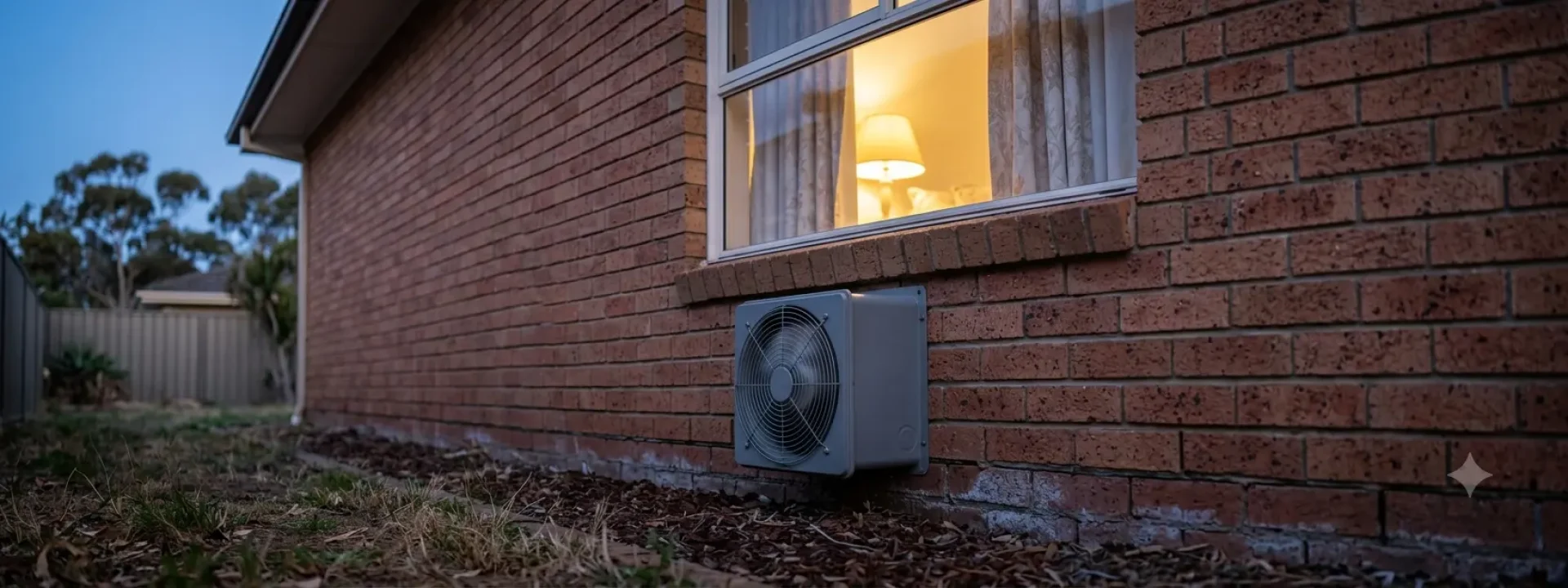
Subfloor ventilation noise Sydney homeowners occasionally report almost always traces back to one of a small number of identifiable causes – and almost all of them are fixable without giving up the airflow the system was installed to provide. Subfloor ventilation noise Sydney properties experience is not something homeowners need to simply live with, whether it’s a persistent hum, an intermittent rattle, or a vibration felt through the floor above. This guide explains what actually causes subfloor ventilation noise Sydney mechanical systems can develop, how to tell the causes apart, and which fixes genuinely address each one.
This is a practical follow-up to our guide on the science behind effective subfloor air circulation, since several noise causes are directly connected to the same airflow and equipment sizing principles covered there.
Why Subfloor Ventilation Noise Sydney Systems Develop in the First Place
Passive vents with no moving parts essentially can’t generate mechanical noise, aside from a loose cover rattling in wind – which points immediately to where noise problems actually originate: mechanical fan systems. Subfloor ventilation noise Sydney complaints almost exclusively relate to fan-based systems, and understanding the physics behind fan noise explains both why some systems are noisier than others and why the fix usually isn’t simply “get a quieter fan” in isolation.
Fan Noise Increases Sharply With Rotational Speed
A well-established principle in fan and ventilation engineering is that fan noise increases sharply as rotational speed increases – considerably faster than airflow itself increases with speed. This means a smaller fan spinning quickly to move a given volume of air is generally noisier than a larger fan moving the same volume of air at a slower rotational speed. Subfloor ventilation noise Sydney systems generate is frequently a direct consequence of an undersized fan being run at high speed to compensate for its limited size, rather than a correctly sized, larger fan running comfortably at a lower, quieter speed.
Vibration Is a Separate Problem From Airborne Sound
Airborne noise – the sound you hear directly – is only one source of the disturbance a subfloor fan can cause. Vibration transmitted through the fan’s mounting, through ducting, or through the building’s own structural framing can travel considerably further than airborne sound alone, sometimes becoming audible or even physically perceptible in rooms directly above the subfloor even when the fan itself isn’t especially loud at close range. Subfloor ventilation noise Sydney homeowners describe as “a hum I can feel in the floor” is almost always this structure-borne vibration pathway rather than simple airborne sound.
Common Causes of Subfloor Ventilation Noise
Several distinct mechanisms produce different noise characteristics, and identifying which one applies is the first step toward an effective fix.
Rigid Mounting Transmitting Vibration Into the Structure
A fan mounted directly and rigidly to structural timber or masonry, with no vibration-isolating material between the two, allows the fan’s own motor and blade vibration to transfer directly into the building structure. This is one of the most common causes of subfloor ventilation noise Sydney homeowners notice as a low-frequency hum or buzz felt through flooring above, rather than heard as a distinct sound from the subfloor itself.
Undersized Fans Running at High Speed
As covered above, a fan that’s too small for the required airflow, compensating by running at a higher speed, produces disproportionately more noise for the airflow it achieves compared with a correctly sized unit. This is a design and sizing issue traceable back to the original installation, discussed in more detail in our guide to subfloor air circulation science.
Turbulent Airflow From Poor Duct Design
Sharp bends, undersized ducting, or duct sections narrower than the fan’s rated output can all create turbulent airflow that produces a distinct rushing or whistling sound, separate from the fan motor noise itself. This kind of turbulence noise tends to worsen as fan speed increases, compounding any issue already caused by an undersized fan.
Blade Imbalance or Debris in the Fan Housing
Over time, dust, debris, or minor damage to fan blades can cause imbalance, producing a rattling or knocking sound that wasn’t present when the system was first installed. This is a maintenance issue rather than a design flaw, and it typically develops gradually rather than appearing immediately after installation.
Worn Bearings
As a fan motor ages, bearing wear commonly produces a higher-pitched whining or grinding sound that increases over time. This is a genuine sign of a fan approaching the end of its serviceable life, distinct from noise caused by sizing or mounting issues present since installation.
Resonance With the Subfloor Cavity
In some cases, a fan’s specific operating frequency can happen to match a resonant frequency of the subfloor cavity itself or nearby structural elements, amplifying what would otherwise be a modest sound into something considerably more noticeable. This is less common than the other causes but can be particularly puzzling to diagnose, since the fan itself may not sound unusually loud in isolation.
Loose or Poorly Fitted Vent Covers
For passive vents, or the external vent covers associated with a mechanical system, a loose, poorly fitted, or corroded cover can rattle in wind gusts, producing an intermittent noise unrelated to the mechanical system’s operation at all. This is worth ruling out early, since it’s one of the simplest issues to identify and fix.
Diagnosing Which Cause Applies
Because different causes call for different fixes, working out which mechanism is actually responsible for a specific subfloor ventilation noise Sydney complaint is worth doing properly rather than guessing.
Timing and Consistency of the Noise
A noise that’s constant whenever the fan runs points toward a mounting, sizing, or duct design issue baked into the system from installation. A noise that has developed gradually over months or years points more toward bearing wear, debris accumulation, or blade imbalance – genuine wear-and-tear rather than an original design flaw.
Location Where the Noise Is Most Noticeable
Noise heard clearly near the subfloor access point but not upstairs suggests airborne sound rather than structure-borne vibration, while a hum or vibration felt specifically in rooms directly above certain sections of subfloor – rather than uniformly throughout the house – often points toward a rigid mounting transmitting vibration through a specific structural connection point.
Whether the Noise Changes With Fan Speed Settings
For systems with variable or humidity-responsive speed control, checking whether noise changes noticeably as fan speed adjusts helps confirm whether speed-related fan noise is the primary factor, as distinct from a constant-volume issue like a loose vent cover unrelated to fan operation.
Solutions That Actually Address Each Cause
Once the likely cause is identified, several established fixes address subfloor ventilation noise Sydney systems can develop without compromising the airflow the system provides.
Anti-Vibration Mounts
Rubber or specialised anti-vibration mounts installed between a fan and its supporting structure absorb vibration before it transfers into the building frame, directly addressing the structure-borne vibration pathway that’s one of the most common sources of subfloor ventilation noise Sydney homeowners report. This is a relatively straightforward retrofit on an existing rigidly mounted fan.
Flexible Duct Connectors
Using flexible rather than rigid connectors between a fan and its ducting isolates vibration at that connection point too, preventing motor vibration from travelling along a rigid duct run into other parts of the subfloor structure.
Correctly Sizing Replacement Fans
Where an undersized fan running at high speed is the underlying issue, replacing it with a correctly sized unit for the required airflow – calculated the same way covered in our subfloor air circulation science guide – generally allows the ventilation systems to run at a lower, quieter speed while still achieving the necessary airflow.
Improving Duct Design
Reducing sharp bends, upsizing undersized duct sections, and ensuring ducting is rated for the fan’s actual output all reduce turbulence noise. This sometimes requires a partial redesign of the ducting layout rather than a simple like-for-like part swap.
Routine Cleaning and Maintenance
Regular cleaning of fan blades and housings prevents the gradual imbalance that debris accumulation causes, and is a straightforward, low-cost maintenance task worth including in any ongoing servicing schedule for a mechanical ventilation systems installation, alongside the general subfloor ventilation maintenance checks discussed in our installation guide.
Bearing Replacement or Fan Replacement
Where bearing wear is the cause, replacing the affected bearings – or, depending on the fan’s age and the cost of parts versus a new unit, replacing the fan entirely – resolves a whining or grinding noise that will otherwise continue to worsen over time.
Addressing Resonance Through Placement or Damping
Resonance issues are typically addressed by adjusting fan placement to avoid the specific structural configuration causing the resonance, or by adding damping material to the affected structural element. This is a more specialised diagnosis and fix, generally requiring professional assessment rather than a straightforward homeowner adjustment.
Replacing or Refitting Loose Vent Covers
A rattling vent cover is usually resolved simply by refitting it correctly or replacing a corroded or damaged cover with a properly fitted new one – one of the least expensive fixes on this list, and worth ruling out before assuming a more complex mechanical cause.
A Practical Troubleshooting Checklist
Before booking a professional assessment, a few checks can help narrow down the likely cause of subfloor ventilation noise Sydney systems are producing.
Step One: Identify When the Noise Occurs
Note whether the noise is constant whenever the system is running, only occurs at certain fan speeds, or seems to vary with weather or wind conditions. This alone helps separate a genuine mechanical or design issue from something as simple as a loose external vent cover reacting to wind gusts.
Step Two: Check for Obvious External Causes First
Before assuming a complex internal fault, check whether any external vent covers are visibly loose, damaged, or corroded, since this is one of the simplest causes to identify and the cheapest to fix.
Step Three: Note Where in the House the Noise Is Most Noticeable
Walking through the house while the system is running and noting exactly where noise or vibration is most noticeable – directly above the fan, in a specific room, or throughout the house generally – gives a professional useful information before they even arrive on site, and can speed up diagnosis considerably.
Step Four: Check How Long the System Has Been Installed and When the Noise Started
A noise present since installation points toward a sizing, mounting, or duct design issue baked in from the start. A noise that developed after months or years of quiet operation points more toward wear – bearings, blades, or debris – developing over time.
Cost Considerations for Noise Remediation
While specific pricing varies by provider and the scope of work required, it’s useful to understand the relative scale of common noise fixes when deciding how to proceed.
Simple Fixes Are Generally Low-Cost
Refitting a loose vent cover, cleaning fan blades, or adding anti-vibration mounts to an existing fan are all relatively minor interventions compared with a full system replacement, and are worth ruling out first before assuming a bigger, more expensive fix is needed.
Sizing Corrections May Involve Equipment Replacement
Where the underlying issue is a genuinely undersized fan running too hard, the fix generally involves replacing the unit with a correctly sized one following the same subfloor ventilation sizing principles – a larger investment than a simple mount or cover fix, but one that also corrects the underlying performance issue rather than just masking the noise symptom.
Weighing Repair Against Replacement for Ageing Systems
For an older mechanical system already showing bearing wear or other age-related symptoms, it’s worth asking a specialist to weigh the cost of repair against replacing the unit entirely, particularly if the fan is approaching the end of its typical serviceable life regardless of the current noise issue. If the subfloor has developed visible mould during a period of reduced airflow while a noisy fan was left switched off to avoid the disturbance, professional mould solutions may need to be addressed alongside whatever fan repair or replacement is decided on.
Noise Considerations Specific to Multi-Storey Homes
Homes with more than one storey introduce an additional wrinkle to subfloor ventilation noise Sydney households experience, since vibration transmitted through structural framing has more building fabric to travel through before reaching occupied rooms. A fan mounted beneath a ground floor living area in a two or three-storey home may transmit vibration noticeably into that immediately adjacent space, even where the same fan on a single-storey home might be less noticeable simply due to differences in floor construction and room usage directly above. This is one of several considerations relevant to multi-storey properties covered in more detail in our dedicated guide to ventilation for multi-storey Sydney homes.
When Noise Points to a Broader System Problem
Occasionally, persistent subfloor ventilation noise Sydney homeowners notice is a symptom of a system that was undersized or poorly designed for the property from the outset, rather than a simple, isolated fault. If a fan is running constantly at high speed because it’s genuinely undersized for the subfloor’s moisture load, a noise-focused fix like anti-vibration mounts will reduce vibration but won’t address the fan running harder than it should for a well-matched system. It’s also worth checking whether the excess moisture load driving the fan harder is actually general subfloor humidity, or a separate capillary rising damp issue that ventilation alone won’t resolve regardless of fan speed. In these cases, a broader reassessment of whether the original subfloor ventilation design was correctly matched to the property is worth pursuing rather than treating each symptom in isolation.
Legal Context: Noise and Neighbour Considerations
For homes in close proximity to neighbouring properties – a genuine consideration in Sydney’s many terrace and semi-detached suburbs – persistent mechanical noise audible from a neighbouring property can potentially raise concerns under NSW’s general noise framework.
The Offensive Noise Framework
Under the NSW Protection of the Environment Operations Act 1997, “offensive noise” is defined broadly as noise that is harmful, or likely to be harmful, to a person outside the premises where it originates, or that unreasonably interferes with their comfort. While the specific noise control regulations more commonly cited by name – covering items like air conditioners, pool pumps, and power tools – focus on well-known common household equipment, continuously operating mechanical equipment generally, including a subfloor ventilation systems fan, would still fall within this general offensive noise framework if it genuinely and unreasonably disturbed a neighbour.
A Practical Reason to Address Noise Early
Beyond any regulatory consideration, addressing subfloor ventilation noise Sydney systems develop promptly – rather than letting a neighbour’s complaint escalate to a formal council process – is simply good practice in Sydney’s densely built suburbs, where party walls and close block spacing in areas like Paddington, Balmain, and Leichhardt mean mechanical noise from one property is more likely to be noticeable next door than it would be on a more widely spaced suburban block.
Preventing Noise Issues From the Outset
The most reliable way to avoid subfloor ventilation noise Sydney problems is proper sizing and installation from the start, rather than troubleshooting noise after the fact.
Correct Sizing During Design
As discussed in our guide to the installation process, a properly calculated fan capacity based on actual subfloor dimensions and moisture load – rather than an oversized safety margin compensated for with high fan speed, or an undersized unit pushed harder than it should run – is the single biggest factor in avoiding noise problems from day one.
Quality Vibration Isolation as Standard Practice
Installing anti-vibration mounts and flexible duct connectors as standard practice during initial installation, rather than as a retrofit after noise complaints arise, costs comparatively little at the time of installation and prevents a problem that’s more disruptive to fix once ducting and fixtures are already in place.
Choosing Fans With Published Noise Ratings
Where fan noise output is specified by the manufacturer, comparing published noise ratings – alongside airflow capacity – during the selection process gives a more informed basis for choosing equipment than airflow capacity or price alone.
Suburb-Specific Noise Considerations
Sydney’s varied housing density affects how noticeable subfloor ventilation noise Sydney systems can be in practice.
Dense Terrace Suburbs
In terrace-heavy suburbs like Paddington, Surry Hills, and Balmain, shared party walls mean vibration transmission is a particularly relevant concern, since structure-borne vibration can potentially travel into an adjoining property’s structure in ways that wouldn’t occur on a freestanding home with no shared wall.
Freestanding Suburban Blocks
On more widely spaced blocks across suburbs like the Hills District or parts of the North Shore, airborne noise reaching a neighbouring property is less likely to be a significant issue, though vibration transmission within the home itself – particularly noticeable in rooms directly above the subfloor – remains a relevant consideration regardless of block size.
Purposeful Information
Q: Why did my subfloor fan get louder over time when it was quiet when first installed?
A: This pattern usually points to bearing wear, blade imbalance from debris accumulation, or general mechanical wear, rather than an original sizing or design issue, which would typically have been noticeable from the start.
Q: Can I fix subfloor ventilation noise myself?
A: Some fixes, like refitting a loose vent cover or basic cleaning, are straightforward. Diagnosing vibration transmission, resonance, or sizing issues generally benefits from a professional assessment, since an incorrect diagnosis can lead to spending on a fix that doesn’t address the actual cause.
Q: Will a quieter fan mean less effective ventilation?
A: Not necessarily. A correctly sized, larger fan running at a lower speed can move the same volume of air as a smaller, faster, noisier fan, while producing considerably less noise – the two aren’t in direct trade-off with each other when sizing is done correctly.
Q: Is it normal to feel vibration in the floor above a subfloor fan?
A: No, this is a fixable issue, usually caused by rigid mounting transmitting vibration into the building structure. Anti-vibration mounts and flexible duct connectors typically resolve this without needing to replace the fan itself.
Q: Could my neighbour make a complaint about my subfloor fan noise?
A: Persistent, genuinely disturbing mechanical noise could potentially fall within NSW’s general offensive noise framework under the Protection of the Environment Operations Act, so addressing a known noise issue promptly is worthwhile, particularly in terrace or semi-detached housing with shared walls.
This guide provides general information about subfloor ventilation noise causes and solutions and is intended for educational purposes, not legal advice on noise regulations. For a proper diagnosis of a specific noise issue, consult a qualified subfloor ventilation specialist; for noise disputes with neighbours, contact your local council for guidance on the applicable process.