
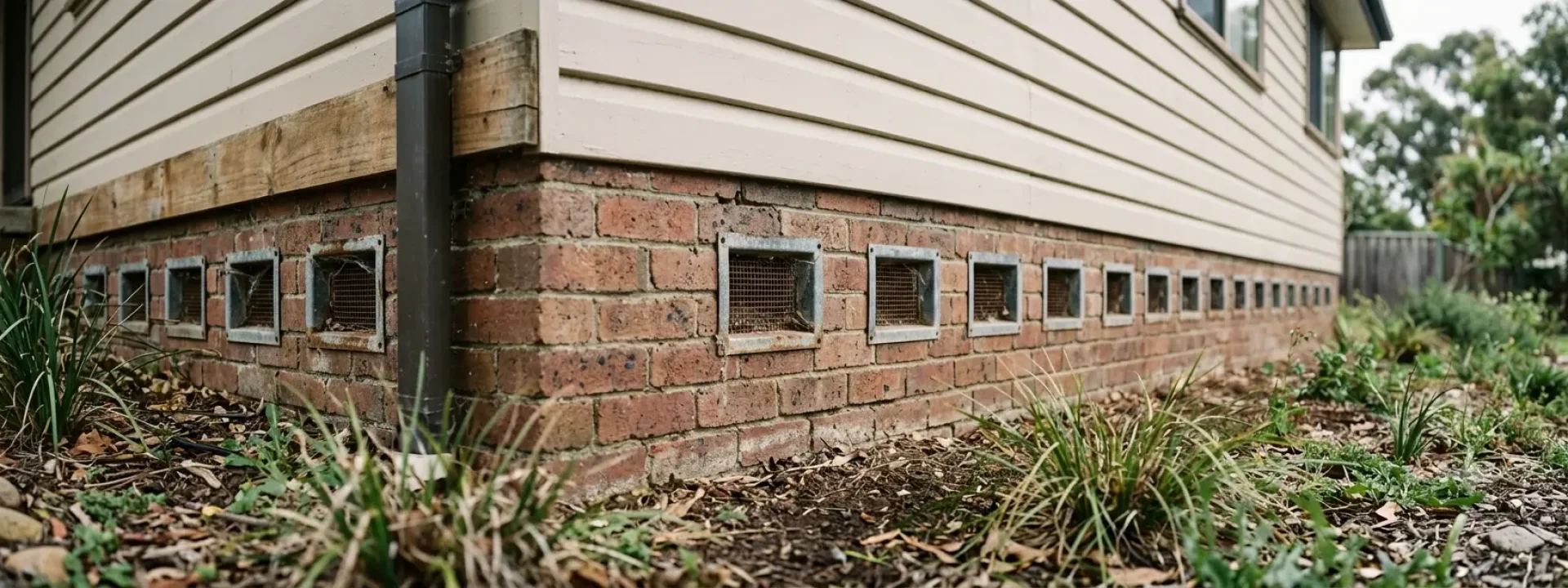
Termite prevention ventilation Sydney homeowners rely on isn’t a formal termite management system in itself, but the connection between the two is real and worth understanding properly. Termite prevention ventilation Sydney properties benefit from works indirectly – a dry, well-ventilated subfloor is a less attractive environment for subterranean termites than a persistently damp one, and it removes some of the “conducive conditions” that pest inspectors specifically look for. This guide explains exactly how termite prevention ventilation Sydney homes achieve fits alongside – not instead of – proper termite management systems and regular professional inspection.
Getting this relationship right matters, because overstating what ventilation can do on the termite front is a genuine risk in itself: a homeowner who believes good subfloor airflow is a substitute for a termite barrier and regular inspections is more exposed, not less. This guide sets out the real, moderate connection clearly, alongside what ventilation definitely can’t replace.
Why Moisture and Termites Are Connected
Subterranean termites – the type responsible for the great majority of structural termite damage across Sydney and the rest of Australia – need consistent access to moisture to survive, alongside a food source (timber and other cellulose material) and, for most species, contact with the soil where their colony is based.
Termites Need Moisture to Survive
Unlike some pest insects that can tolerate very dry conditions, subterranean termites are vulnerable to desiccation and rely on maintaining a humid microenvironment within their mud tubes, galleries, and nesting areas. A persistently damp subfloor – whether from inadequate ventilation, a high water table, or a moisture-holding reactive clay soil – provides exactly the kind of humid, stable environment that makes sustained termite activity easier to maintain, compared with a drier, better-ventilated space where humidity fluctuates more and evaporates more readily.
Damp Timber Is More Vulnerable to Attack
Beyond the general moisture environment, timber that has already been softened by fungal decay – itself a consequence of prolonged dampness – is generally easier for termites to penetrate and consume than sound, dry structural timber. This creates a compounding effect: poor termite prevention ventilation Sydney homes have in place allows timber decay to establish, and that decayed timber then becomes a more attractive and more easily exploited food source for any termites that do find their way to the structure.
“Conducive Conditions” in Professional Termite Inspections
Licensed termite inspectors carrying out an assessment under the Australian Standard for timber pest inspections don’t just look for active termite activity – they also assess and report on “conducive conditions,” meaning site and building factors that make termite attack more likely even where no current activity is found. Persistent subfloor dampness, poor ventilation, inadequate ground clearance, and timber-to-ground contact are all conditions inspectors commonly flag, and addressing them – including through improved termite prevention ventilation Sydney homes can install – is a standard recommendation following many routine inspections.
What Termite Prevention Ventilation Sydney Properties Actually Achieve
It’s worth being precise about the scope of what ventilation contributes here, since the connection is real but limited.
Reducing, Not Eliminating, Attractiveness to Termites
A well-ventilated, drier subfloor is less hospitable to termites than a persistently damp one, but it doesn’t create a barrier that physically prevents termites from reaching a structure. Subterranean termites travel through soil and can construct mud tubes across masonry and other surfaces specifically to maintain the humidity they need while foraging, meaning a dry subfloor makes conditions somewhat less favourable rather than making termite access impossible. Termite prevention ventilation Sydney homes achieve through this mechanism is a genuine risk-reduction factor, not a termite-proofing measure.
Supporting, Not Replacing, Formal Termite Management
Australian building requirements for new construction include a nominated termite management system – commonly a physical or chemical barrier, or in some cases termite-resistant construction materials – installed specifically to manage termite risk, separate from and in addition to subfloor ventilation. For existing homes without one of these systems already in place, professional advice on installing an appropriate termite management system remains the primary defence, with termite prevention ventilation Sydney homes benefit from playing a supporting role by reducing conducive conditions rather than functioning as the management system itself.
Making Inspections More Reliable
Adequate ground clearance – itself a subfloor ventilation and access requirement – is directly connected to how effectively a professional inspector can actually see and assess subfloor framing during a routine termite inspection. The National Construction Code specifically increases the required minimum ground clearance where a termite inspection zone needs to be regularly checked, precisely because inadequate clearance makes thorough visual inspection difficult or impossible. In this sense, termite prevention ventilation Sydney homes are set up with doesn’t just reduce conducive conditions directly – it also supports the ongoing inspection regime that catches problems early.
Common Termite Species Affecting Sydney Homes
Understanding which termites are actually relevant in Sydney helps put the moisture connection in context.
Coptotermes: The Most Economically Destructive Genus
Coptotermes species, particularly Coptotermes acinaciformis, are widely recognised in Australian pest management as among the most economically destructive termites affecting homes, capable of forming very large colonies and causing significant structural damage before being detected. These termites typically nest underground or within tree trunks and stumps, making the nest itself difficult to locate, which is one of the reasons prevention-focused measures – including reducing conducive conditions through adequate ventilation – matter alongside detection-focused inspection.
Schedorhinotermes and Nasutitermes
Schedorhinotermes species are also common across the Sydney region and are known for establishing multiple interconnected nests, which can make control more difficult since eliminating one nest doesn’t necessarily remove the colony’s ability to persist elsewhere on a property. Nasutitermes species are generally easier to locate since they often build visible above-ground mounds, though they can forage significant distances from the nest to reach a food source, including a home some distance from where the mound itself is visible.
Why Species Identification Matters for Treatment
Because different termite species respond differently to various treatment and bait approaches, correct identification by a licensed pest professional is an important part of any termite management response – this isn’t something a homeowner should attempt to determine and act on independently, and disturbing termite workings or nests before a professional assessment can make subsequent treatment less effective.
Formal Termite Management Systems: What They Actually Involve
Because termite prevention ventilation Sydney measures only address part of the picture, it’s worth understanding what a formal termite management system actually consists of, separate from ventilation entirely.
Chemical Soil Treatments
A chemical soil treatment creates a continuous, treated zone in the soil around and beneath a structure, designed to prevent subterranean termites from passing through undetected on their way to the building. These treatments typically need to remain continuous and undisturbed to remain effective, which is why landscaping changes, new plumbing trenches, or extensions can compromise an existing chemical barrier if the disturbed section isn’t correctly reinstated.
Physical Termite Barriers
Physical barriers – typically fine stainless steel mesh or specially graded particle systems installed during construction – work by preventing termites from physically passing through gaps around plumbing penetrations, slab edges, and other points where soil-based treatments can be harder to maintain consistently over time. These are most commonly installed in new construction, since retrofitting a physical barrier to an existing home is considerably more invasive than installing one during the original build.
Baiting Systems
Baiting systems place termite bait stations around a property, designed to attract foraging termites to a slow-acting bait that’s carried back to the colony and shared among colony members, gradually reducing colony numbers over time rather than creating an immediate physical or chemical barrier. Baiting systems are commonly used both as a standalone management approach and as a monitoring tool that gives early warning of termite activity on a property before it reaches the structure itself.
Renovations Are a Common Way Barriers Get Compromised
Pest management professionals commonly flag renovations and extensions as one of the more frequent ways an existing termite barrier gets breached, since new trenching, altered ground levels, or added structures can create a gap in what was previously a continuous barrier if the disturbed section isn’t correctly reinstated to the original standard. Anyone planning a renovation on a property with an existing termite management system should specifically confirm with their termite management provider how the barrier will be maintained through the works, rather than assuming it will remain intact automatically.
Insurance Considerations
Termite damage is treated differently to many other forms of property damage under most Australian home insurance policies. Many standard building insurance policies exclude termite damage from cover, on the reasoning that termite risk is considered an ongoing maintenance responsibility for the property owner rather than a sudden, unforeseen event in the way a storm or fire would be. Policy terms vary between insurers, so checking your own policy’s specific exclusions is worthwhile, but this general position is a significant part of why proactive prevention – including both termite prevention ventilation Sydney measures and a properly maintained formal termite management system – matters considerably more than it would for a risk that’s reliably covered by insurance regardless of prevention efforts.
How Mechanical Ventilation Adds an Extra Layer
Where passive vents alone aren’t achieving consistently low subfloor humidity – particularly on reactive clay sites or in sheltered, poorly exposed locations – mechanical ventilation systems can provide more consistent moisture reduction than passive airflow alone. Since sustained humidity is one of the clearest conducive conditions inspectors look for, a mechanical system that reliably keeps subfloor humidity lower across more of the year strengthens the termite prevention ventilation Sydney benefit beyond what passive vents achieve on a difficult site, even though it still isn’t a substitute for a formal termite management system.
Professional Termite Inspection Requirements
Regular professional inspection remains the primary way termite activity is detected before it causes significant damage, regardless of how good a property’s termite prevention ventilation Sydney measures are.
AS 3660 Inspection Frequency
The Australian Standard AS 3660.2 recommends termite inspections at least every 12 months for most properties, with more frequent inspections – commonly every six months – recommended for higher-risk situations, such as properties adjoining bushland, properties with a known history of termite activity, or homes with untreated timber subfloors. Termite prevention ventilation Sydney homes have in place doesn’t change this recommended inspection frequency; a well-ventilated subfloor still needs the same regular professional check as any other property.
What a Professional Inspection Covers
A compliant timber pest inspection, generally carried out under the related inspection standard AS 4349.3, covers accessible interior rooms, the subfloor space, roof void, exterior, and typically surrounding garden areas within a set distance of the main structure. Inspectors look for mud tubes, damaged or hollow-sounding timber, frass (termite droppings), and any live termite activity, alongside assessing conducive conditions like subfloor dampness and ground clearance.
Why DIY Termite Assessment Isn’t a Substitute
Termite identification and activity assessment is a specialised skill, and DIY inspection – even by a conscientious homeowner – is not considered an adequate substitute for a licensed professional inspection, partly because subtle signs of activity are easily missed by an untrained eye, and partly because disturbing suspected termite workings without professional guidance can make an existing problem harder to treat effectively.
Building a Combined Moisture and Termite Prevention Strategy
Since moisture management and termite risk are connected but distinct problems, an effective approach addresses both together rather than treating either in isolation.
Addressing Subfloor Moisture as a Foundational Step
Because persistent dampness is a recognised conducive condition, a proper subfloor ventilation assessment and any needed upgrade is a sensible foundation for a broader termite prevention ventilation Sydney strategy, reducing one of the environmental factors that makes sustained termite activity easier to establish and maintain. A specialist reviewing ventilation systems as part of this assessment can flag ground clearance or airflow issues worth raising with your termite management provider too.
Maintaining Adequate Ground Clearance for Inspection Access
Ensuring subfloor clearance meets the increased requirement for termite-inspected zones – not just the general ventilation minimum – keeps the subfloor genuinely accessible for the regular professional inspections that remain the primary defence against undetected termite activity. This is one of the specific checks worth raising when booking a subfloor ventilation assessment on an older property where clearance may not have been designed with modern inspection access in mind.
Installing or Verifying a Formal Termite Management System
Alongside ventilation improvements, confirming that an appropriate termite management system is in place – and that it hasn’t been compromised by subsequent renovations, landscaping changes, or new plumbing penetrations – is the piece that termite prevention ventilation Sydney measures alone cannot provide. This is squarely a job for a licensed termite management professional rather than a general subfloor ventilation specialist.
Resolving Existing Moisture Damage Alongside Termite Treatment
Where subfloor timber has already suffered moisture-related decay, that timber is both a structural liability and a more attractive termite target, making it sensible to address decayed or compromised timber and any underlying moisture source – including capillary rising damp treatment where relevant – as part of the same overall remediation rather than treating decay repair and termite management as entirely separate projects. Where dampness has also led to mould growth in affected subfloor areas, professional mould solutions address that separate but related consequence of the same underlying moisture problem.
Warning Signs Worth Investigating Between Inspections
While annual professional inspections remain the primary defence, a few observable signs are worth acting on immediately rather than waiting for the next scheduled check.
Mud Tubes and Shelter Tubes
Pencil-thick mud tubes on foundation walls, piers, or slab edges are a classic sign of subterranean termite activity, built to maintain the humid, sheltered conditions termites need while travelling between the soil and a food source above ground. These should never be broken open or disturbed by a homeowner, since doing so can cause the colony to retreat and relocate rather than resolving the problem.
Hollow-Sounding or Damaged Timber
Timber that sounds hollow when tapped, or skirting boards and door frames that appear intact on the surface but feel soft or give way under light pressure, can indicate termites have been active from the inside without yet breaking through to a visible surface. This kind of internal damage is one of the reasons professional inspection – using tools like moisture meters and thermal imaging in addition to a visual check – is more reliable than a homeowner’s surface-level look.
Discarded Wings Near Windows or Light Fittings
Termite colonies periodically produce winged reproductive termites, known as alates, which swarm to establish new colonies and shed their wings shortly after landing. Finding small discarded wings near windowsills or light fittings, particularly after warm, humid weather, can indicate a nearby termite colony has recently swarmed, even if no other activity is visible on the property itself.
Suburb Considerations Across Sydney
Termite pressure and subfloor moisture conditions both vary across Sydney, and the two often compound in similar locations.
Bushland-Fringed Suburbs
Suburbs bordering significant bushland reserves – including parts of the Sutherland Shire, the Northern Beaches, the Hills District, and pockets of the Upper North Shore – typically experience higher termite foraging pressure from surrounding natural termite populations, which is why pest professionals commonly recommend more frequent inspections in these areas regardless of a property’s specific subfloor conditions.
Reactive Clay Suburbs and Compounding Moisture Risk
Western Sydney suburbs sitting on reactive clay, discussed in more detail in our guide to Sydney’s soil and moisture science, often experience the kind of persistent subfloor dampness that creates favourable conducive conditions for termites, making a well-designed termite prevention ventilation Sydney approach particularly relevant in areas like Parramatta, Liverpool, and the broader Cumberland Plain. Properties in these suburbs showing signs of capillary rising damp alongside general subfloor humidity often need both a rising damp treatment and a ventilation upgrade addressed together.
Established Inner West and Heritage Suburbs
Older homes across the Inner West and other heritage-dense suburbs, discussed in our guide to heritage home ventilation, often combine ageing, sometimes undersized original vents with older timber that may already have some degree of decay – a combination that makes both a ventilation review and a current termite inspection particularly worthwhile if either hasn’t been checked recently. Where decay has already progressed and mould is present alongside it, addressing both through professional mould solutions and a termite inspection at the same time avoids treating one symptom while leaving the other underlying condition unresolved.
Purposeful Information
Q: Does good subfloor ventilation prevent termites?
A: Not entirely. It reduces one of the conducive conditions – persistent dampness – that makes sustained termite activity easier to establish, but it doesn’t create a physical barrier against termite access. A formal termite management system and regular professional inspections remain necessary.
Q: How often should I get a termite inspection if my subfloor is well ventilated?
A: The same as any other property – at least every 12 months under AS 3660.2, or more frequently in higher-risk situations such as bushland-adjoining properties. Good ventilation doesn’t change the recommended inspection frequency.
Q: Can I rely on ventilation instead of a termite barrier?
A: No. Ventilation and termite management systems address different aspects of termite risk. A termite barrier or management system is specifically designed to manage termite access, while ventilation reduces the moisture conditions that make an area more attractive to termites generally.
Q: What are the most common termites found in Sydney homes?
A: Subterranean termites in the Coptotermes, Schedorhinotermes, and Nasutitermes genera are the main groups affecting Sydney homes, with Coptotermes acinaciformis widely regarded as the most economically destructive species.
Q: Should I disturb a mud tube or termite trail if I find one?
A: No. Disturbing termite workings can cause the colony to retreat and relocate, making subsequent professional treatment more difficult. Leave any suspected termite activity undisturbed and contact a licensed pest professional.
This guide explains the general relationship between subfloor moisture, ventilation, and termite risk and is intended for educational purposes. It is not a substitute for a licensed timber pest inspection or professional termite management advice. For termite-specific assessment and treatment, consult a licensed pest management professional; for subfloor ventilation matched to your property’s moisture conditions, consult a qualified subfloor ventilation specialist.