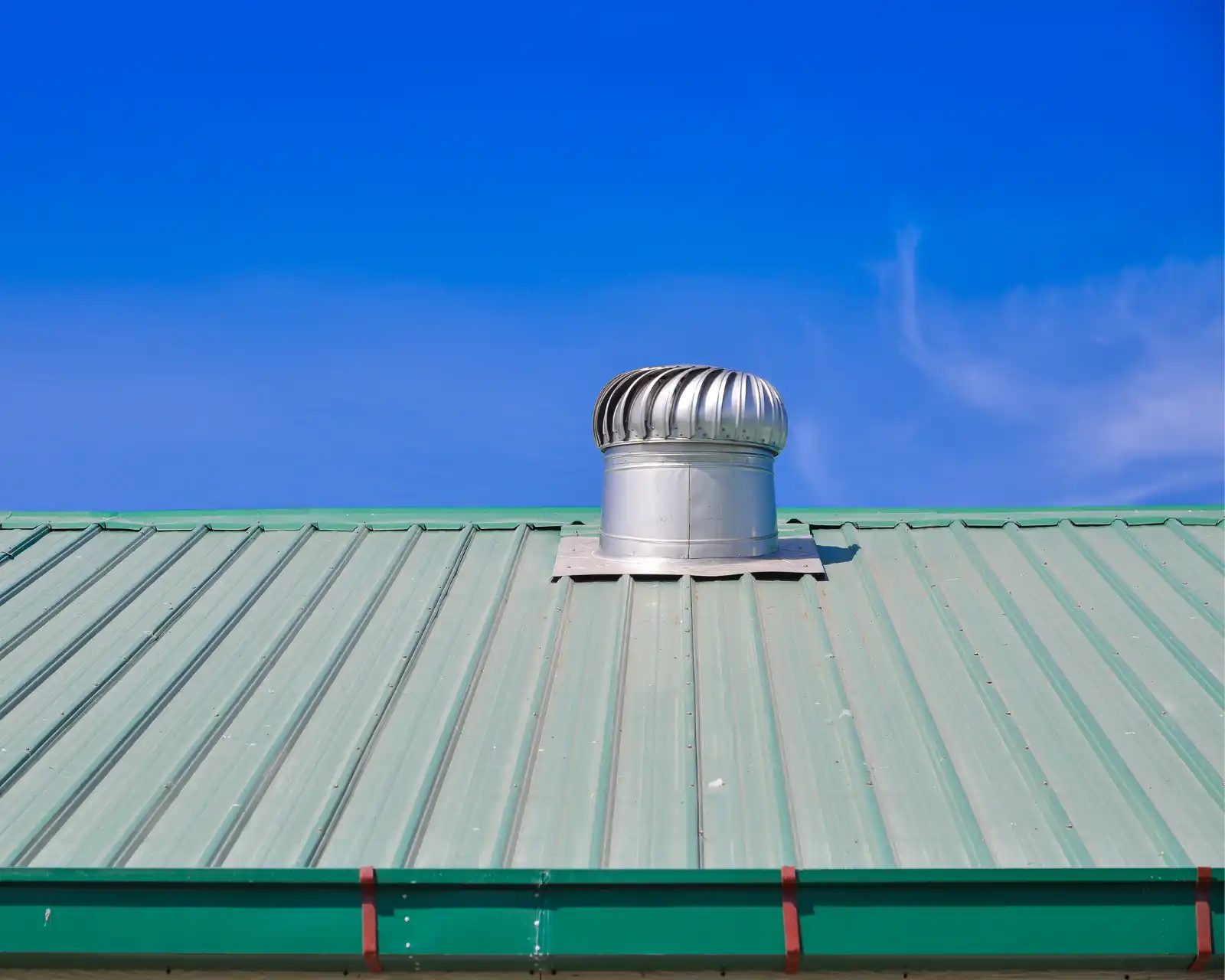
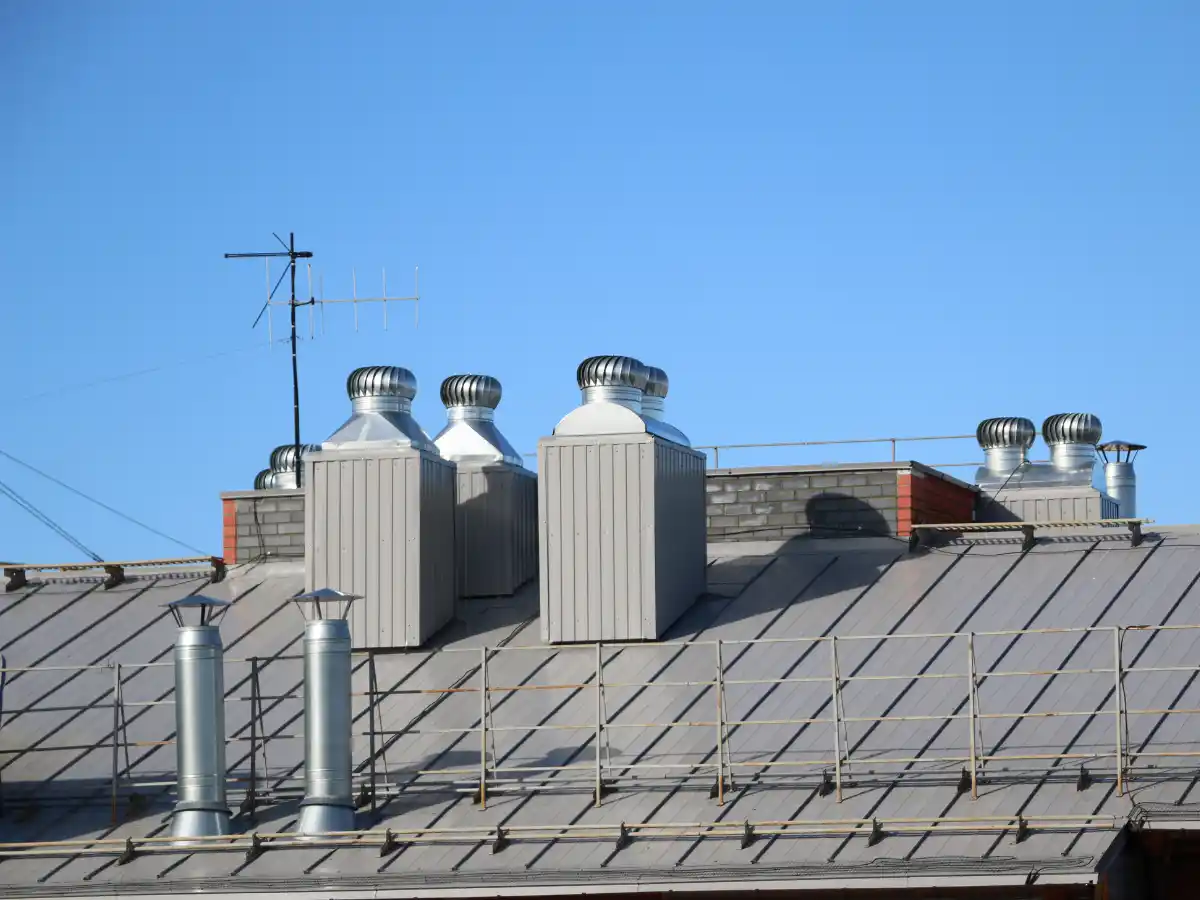
Roof ventilation lets hot, humid air escape from the roof space, the cavity between your ceiling and your roof. Whirlybirds and solar roof ventilators are the two common ways to do it.
On a hot Sydney day, the sun heats the roof and the air trapped beneath it can get much hotter than the air outside. That heat doesn’t stay put. It works its way through the ceiling into the rooms below, which is why upstairs bedrooms and top-floor rooms often feel the worst.
Moisture adds to the problem. Everyday living puts water vapour into the air, and in a closed roof space that humid air has nowhere to go. It can condense on cooler surfaces, and damp surfaces are where mould gets started.
A roof vent gives that hot, humid air a way out. As it leaves, cooler air is drawn in to replace it, so the roof space stops holding heat like a storage heater. It works alongside insulation, shading and cooling rather than replacing them.